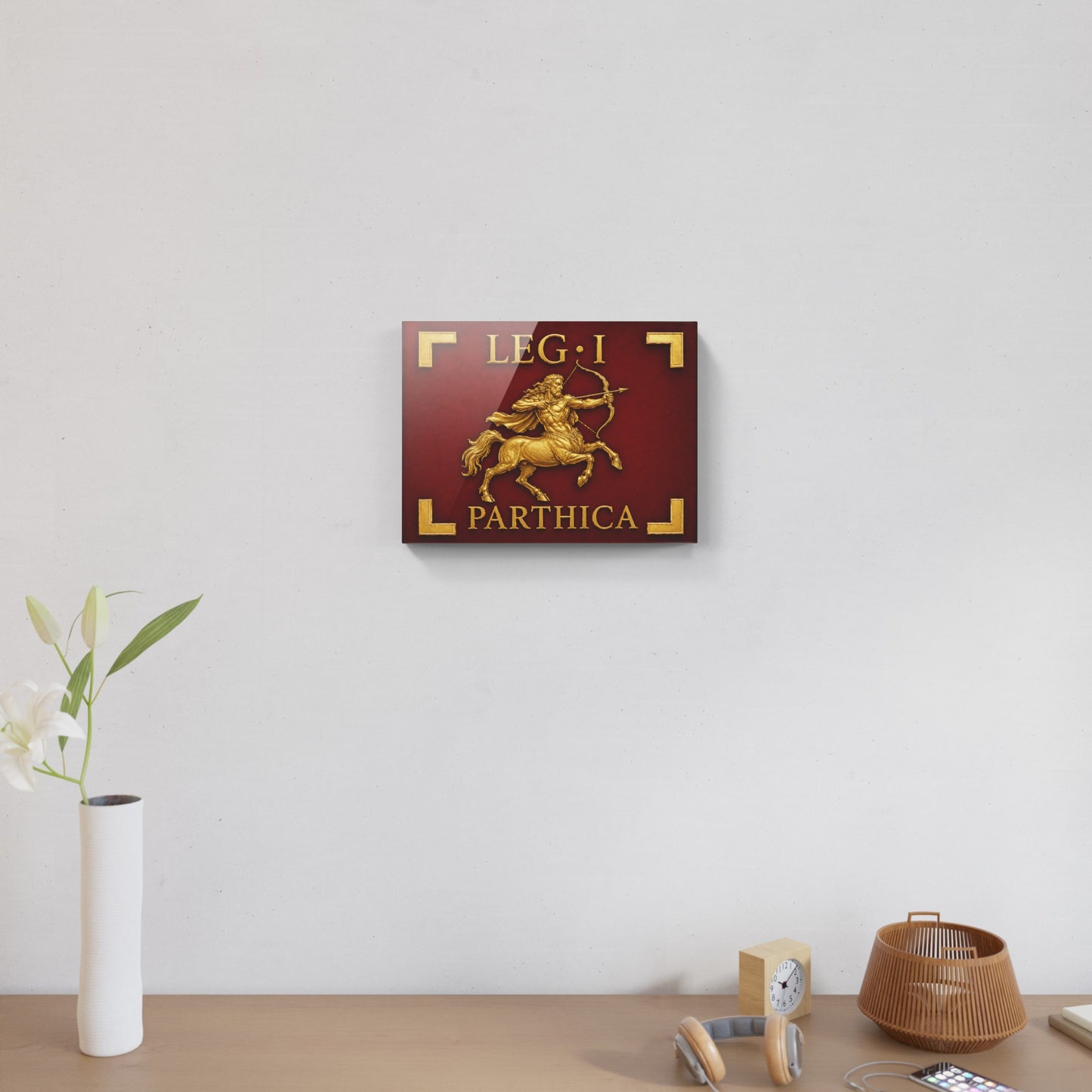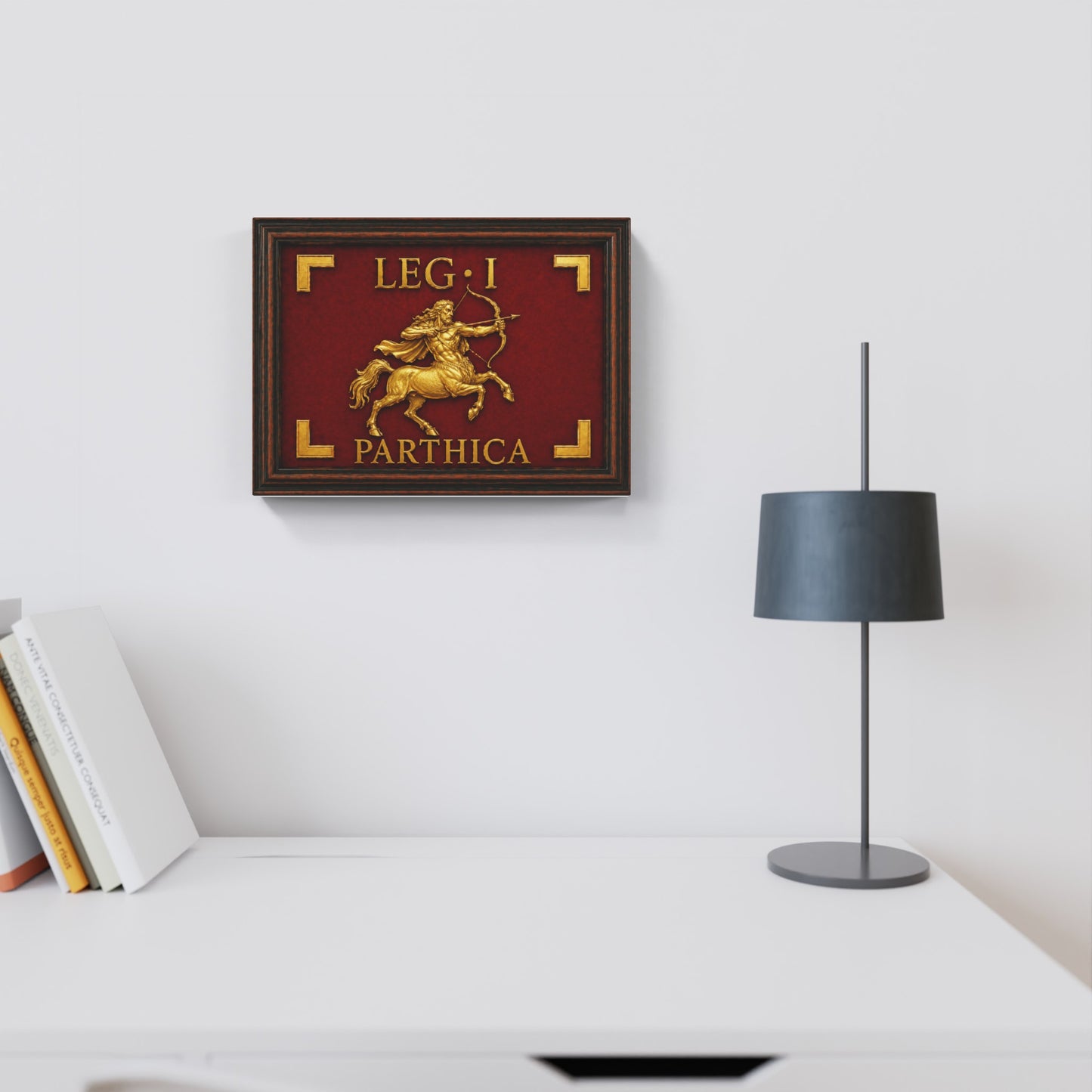


Legio I Parthica Roman Vexillum
Legio I Parthica Roman Vexillum
o una misura particolare? • Avvia chat WhatsApp
Couldn't load pickup availability
Legio I Parthica was created by Septimius Severus in 197 AD for the war against the Parthians, along with its sister legions II and III Parthica.
After the victorious campaign, which culminated in the sack of Ctesiphon, the legion remained in the East as a garrison force to defend the new province of Mesopotamia. Over time, it was mainly employed along the eastern border, between Singara and then Nisibis, in a crucial area for containing the threats of the Parthians first and then the Sasanids.
Sources also link it to the wars of Caracalla and Alexander Severus against the Persians, a sign of its strategic importance on the Mesopotamian frontier. Its presence in the Middle East is attested until the early 5th century, when the legion disappears from sources, probably as part of the Late Antique military transformations.
HISTORICAL-PHILOLOGICAL VEXILLUM
-
 Format
40 x 30 cm, balanced and versatile proportions -
 Philological reconstruction
The choice of animal in the vexillum is based on historical and numismatic sources -
 Color fidelity
Red inspired by the only original Roman vexillum preserved at the Pushkin Museum in Moscow
Product specifications for banner
Product: Historical-philological vexillum
Material: print on canvas
Size: 40 x 30 cm
Technique: inkjet printing on canvas
Reconstruction: based on historical, epigraphic and numismatic sources
Installation: supplied with a wooden support for easy wall hanging
Product specifications for acrylic
Product: Historical-philological vexillum
Material: glossy print on acrylic
Size: 40 x 30 cm
Technique: high-definition reproduction with brilliant rendering
Reconstruction: based on historical, epigraphic and numismatic sources
Installation: supplied with a hook for easy wall hanging
Product specifications for framed canvas
Product: Historical-philological vexillum
Material: print on pictorial canvas
Size: 40 x 30 cm
Technique: inkjet printing on pictorial canvas
Frame: hand-carved walnut wood
Reconstruction: based on historical, epigraphic and numismatic sources