

Madonna with the Long Neck, by Parmigianino (1534-1540)
Madonna with the Long Neck, by Parmigianino (1534-1540)
Couldn't load pickup availability
- Shipping with real-time tracking
- Handmade in 4-5 working days
or a special size? • Chat with us
Francesco Mazzola, known as Parmigianino, was a precocious artist trained in Parma under the influence of Correggio. In Rome he studied the works of Michelangelo and Raphael, developing an elegant and refined Mannerist style. The "Madonna with the Long Neck" was commissioned in 1534 by Elena Baiardi Tagliaferri for the church of Santa Maria dei Servi in Parma. Although the artist had promised to finish it within five months, the work was still incomplete at his death in 1540. It was nevertheless displayed in 1542, with an inscription explaining why it was unfinished.
The Virgin, depicted with elongated forms and an exaggeratedly long neck, contemplates Jesus asleep on her lap, foreshadowing the Passion of Christ. The Infant Jesus is shown at an unusually advanced age, like a six-year-old child, yet with the baldness typical of newborns. Despite the sacred subject, Parmigianino introduces sensual elements in the elegant figures and in the Virgin's clinging drapery.
The painting entered the Medici collections in 1698. A pink curtain forms the backdrop to the seated Madonna, whose long neck gives the work its name. The right-hand side of the painting, marked by an empty area, shows a row of tall columns without capitals and an emaciated figure who may be a prophet or St Jerome. Nearby is a foot without a body, perhaps belonging to St Francis, a sign that the work is unfinished.
The iconographic choices are precise: the column symbolises purity, as in the Song of Songs, and the amphora, a symbol of the Virgin, foreshadows the Crucifixion. Sophisticated in content and formal in style, the painting remains a perfect example of Mannerist art.
Feel history under your fingertips
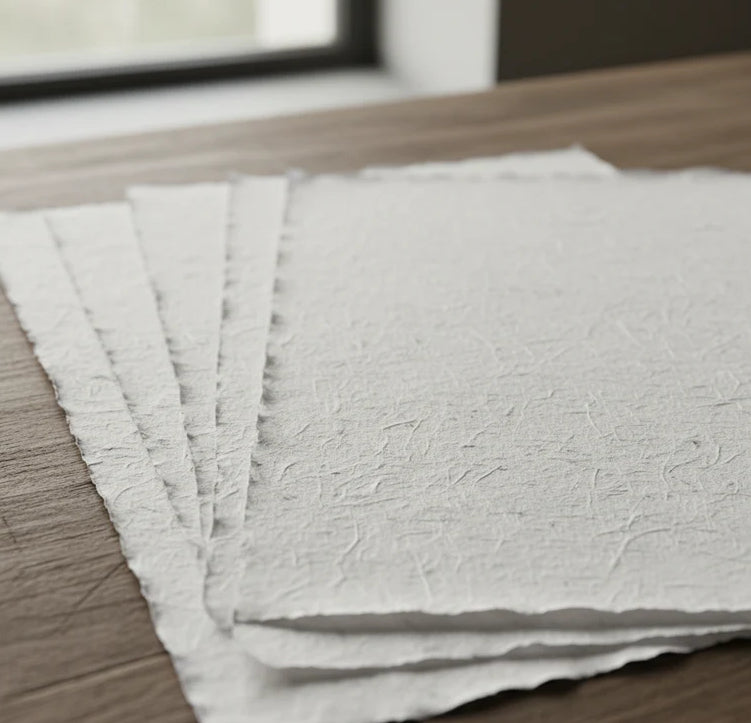
Our reproductions are extremely faithful to the original and printed on fine Amalfi paper.
It is a paper made exclusively from cotton fibres, thick and naturally porous, yet soft to the touch, with the characteristic deckled edges that bear witness to its handcrafted making.
It is still made today using ancient medieval techniques, in the workshops of Amalfi.
Materials of the finest quality
-
 Amalfi paper
Thick, porous, with the characteristic deckled edges -
 Handcrafted frame
Made from fine wood, assembled by hand -
 Museum glass
The same ultra-glossy glass used in museums
TECHNICAL SPECIFICATIONS
Print on handmade Amalfi paper with frame
Sheet size: 29 x 42 cm (11.4 x 16.5 in)
With frame: 31 x 44 cm (12.2 x 17.3 in)
Material: artwork printed on very fine handmade Amalfi paper with deckled edges, handmade beech wood frame
Print on painter's canvas
Size: 80 x 60 cm (31.5 x 23.6 in)
Material: artwork printed on very fine-grain painter's canvas
Frame: light brown beech wood and wood pulp, handmade