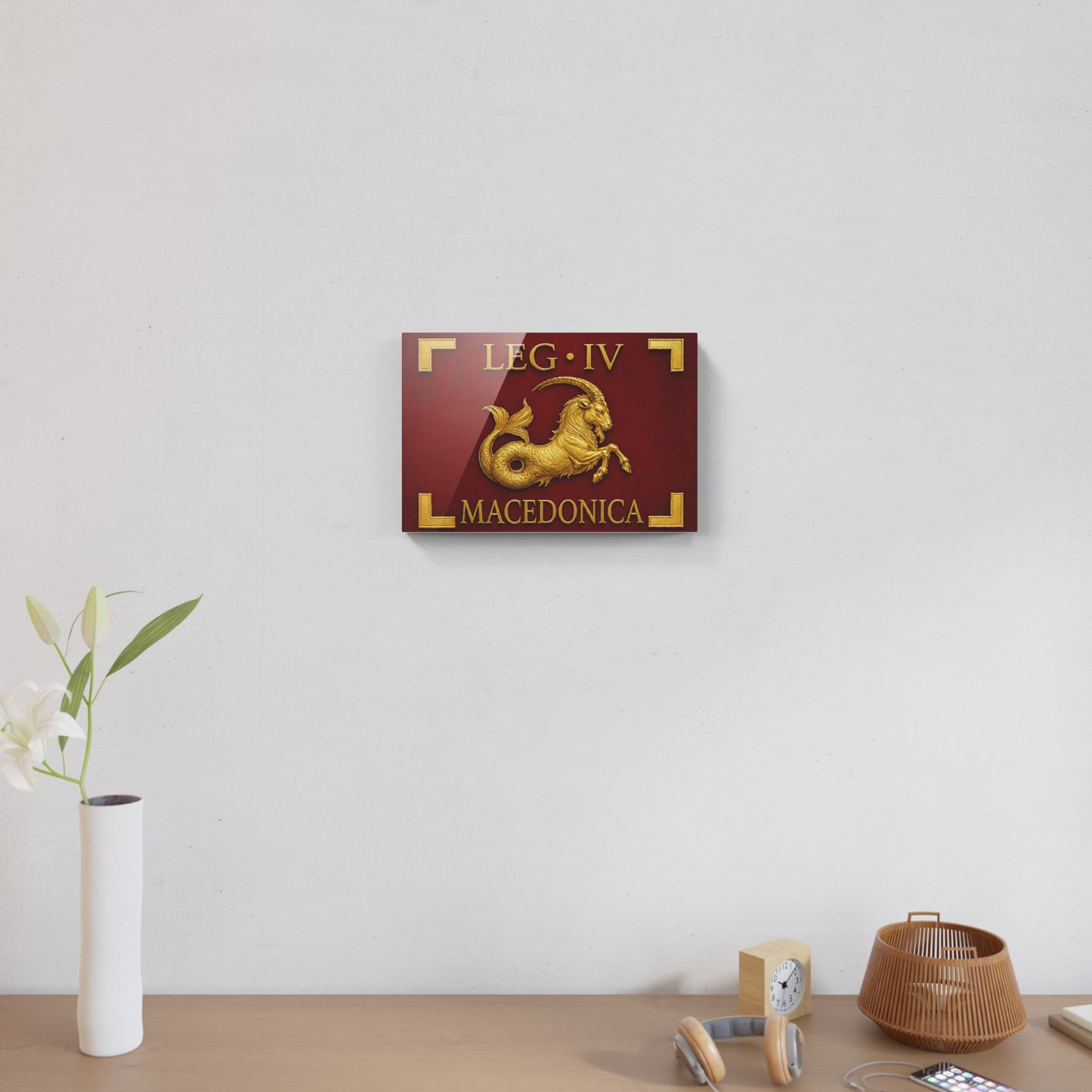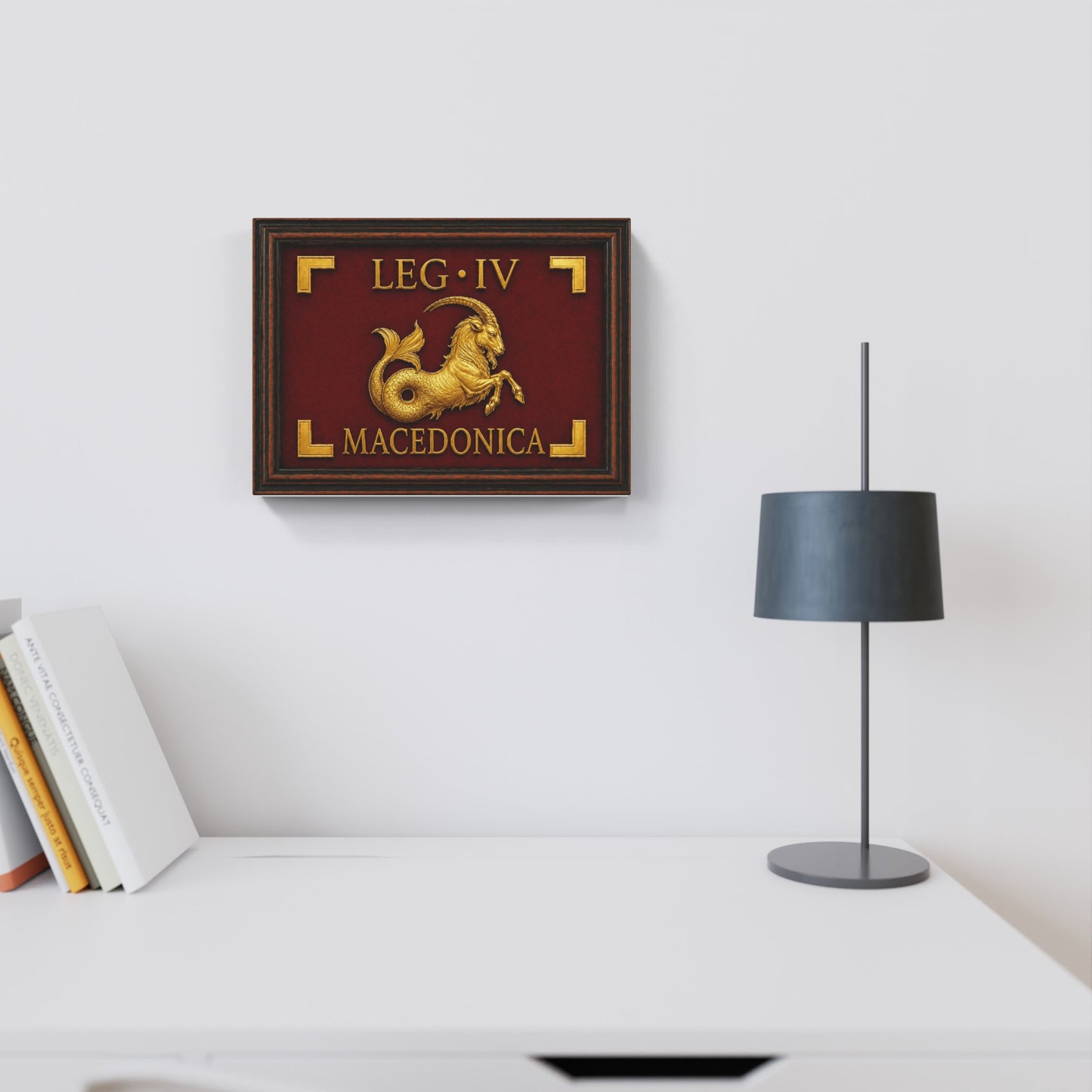


Legio IV Macedonica Roman Vexillum
Legio IV Macedonica Roman Vexillum
o una misura particolare? • Avvia chat WhatsApp
Couldn't load pickup availability
Legio IV Macedonica was created by Gaius Julius Caesar in 48 BC, enrolling Italic legionaries for the civil war against Gnaeus Pompeius Magnus. It immediately fought at Dyrrhachium and especially at Pharsalus, where Caesar defeated Pompey, and from then on it was associated with his name. After the conflict, the legion was stationed in Macedonia, from which it derived its cognomen Macedonica.
Octavian, the future Augustus, used the legion first against Caesar's assassins at Philippi (42 BC), then against Mark Antony at Actium (31 BC), making it one of his most trusted units. He later transferred it to Hispania Tarraconensis for the Cantabrian Wars, to guard the new Roman dominion in the West. In the early imperial age, the IV Macedonica was then deployed on the Rhine, in the Germanic area, participating in the defense of the limes and intervening in the unrest of the 1st century AD.
During the "Year of the Four Emperors" (69 AD), the legion supported Vitellius against Otho and Vespasian, a choice that determined its political end. In 70 AD, Vespasian disbanded it, reusing its veterans to found Legio IV Flavia Felix, a new unit loyal to the Flavian dynasty.
HISTORICAL-PHILOLOGICAL BANNER
-
 Format
40 x 30 cm, balanced and versatile proportions -
 Philological reconstruction
The choice of animal in the banner is based on historical and numismatic sources -
 Color fidelity
Red inspired by the only original Roman vexillum preserved at the Pushkin Museum in Moscow
Product specifications on banner
Product: Historical-philological banner
Material: print on canvas
Size: 40 x 30 cm
Technique: inkjet printing on canvas
Reconstruction: based on historical, epigraphic and numismatic sources
Installation: supplied with a wooden support to be easily hung on the wall
Acrylic product specifications
Product: Historical-philological banner
Material: glossy print on acrylic
Size: 40 x 30 cm
Technique: high-definition reproduction with brilliant rendering
Reconstruction: based on historical, epigraphic and numismatic sources
Installation: supplied with a hook to be easily hung on the wall
Product specifications on framed canvas
Product: Historical-philological banner
Material: print on painter's canvas
Size: 40 x 30 cm
Technique: inkjet printing on painter's canvas
Frame: hand-carved walnut wood
Reconstruction: based on historical, epigraphic and numismatic sources