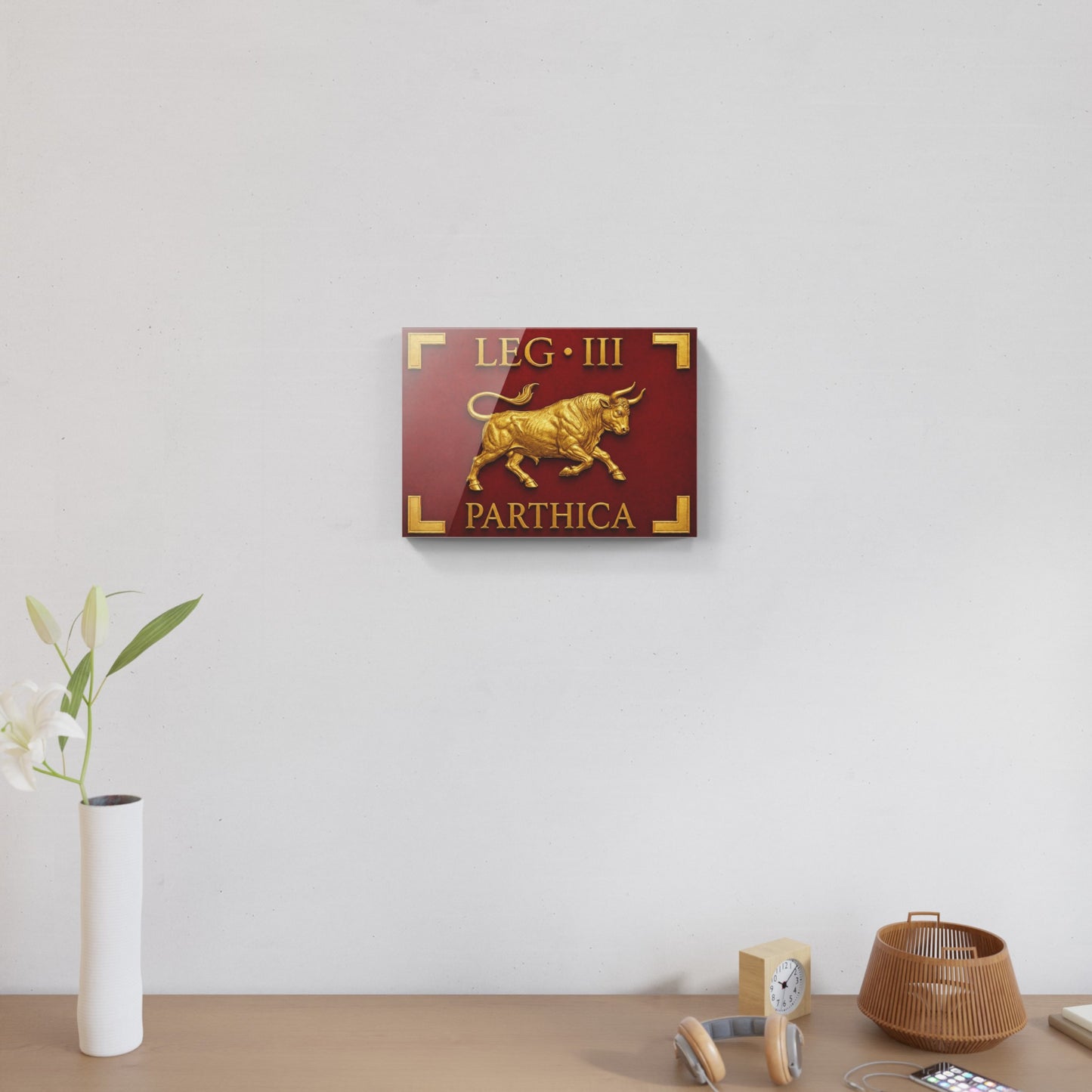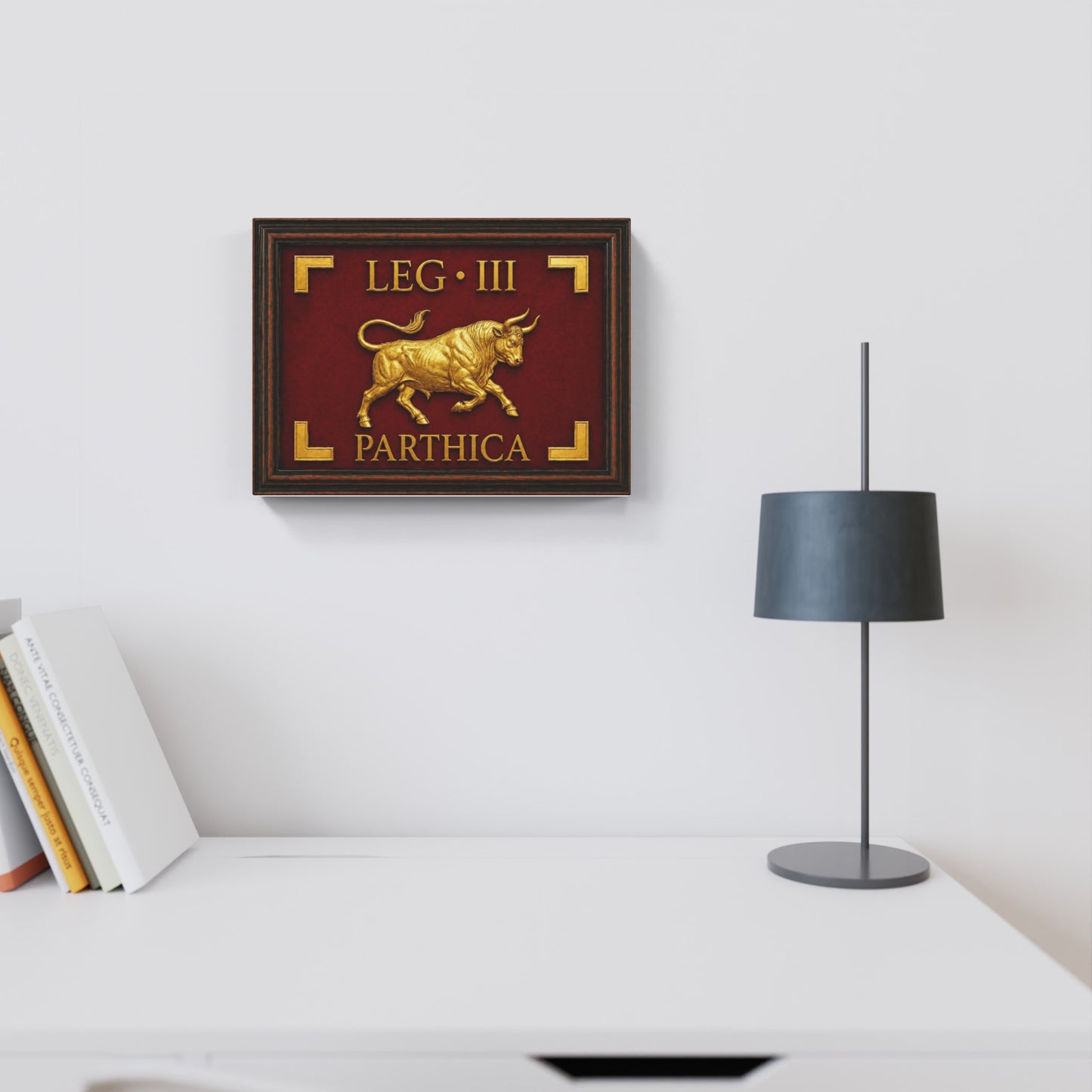


Legio III Parthica Roman Vexillum
Legio III Parthica Roman Vexillum
o una misura particolare? • Avvia chat WhatsApp
Couldn't load pickup availability
Legio III Parthica was created by Septimius Severus in 197 AD for the great campaign against the Parthian Empire, along with its sister legions I and II Parthica, largely recruited from Syrian conscripts already loyal to Pescennius Niger.
The expedition concluded with the capture and sacking of Ctesiphon, after which the legion remained permanently in the East to garrison the new province of Mesopotamia. Its main base camp was Rhesaena, along the Chaboras, with the task of controlling communication routes to the Euphrates and confronting first the Parthians, then the Sasanids.
In the 3rd century, the III Parthica participated in Caracalla's campaigns against the Parthians (216-217), in clashes under Alexander Severus, and in the victorious Battle of Resaena during Gordian III's war against the Sasanids. Despite mutinies and the upheavals of the period, the legion continued to operate as a frontier force, progressively becoming a Mesopotamian limitanea unit. The Notitia Dignitatum still mentions it in the early 5th century, stationed at Apatna in Osroene, evidence of its long fidelity to the eastern theater of the Roman Empire.
HISTORICAL-PHILOLOGICAL VEXILLUM
-
 Format
40 x 30 cm, balanced and versatile proportions -
 Philological reconstruction
The choice of animal in the vexillum is based on historical and numismatic sources -
 Color fidelity
Red inspired by the only original Roman vexillum preserved in the Pushkin Museum in Moscow
Product specifications for standard
Product: Historical-philological vexillum
Material: print on canvas
Size: 40 x 30 cm
Technique: inkjet print on canvas
Reconstruction: based on historical, epigraphic and numismatic sources
Installation: supplied with wooden support for easy wall hanging
Acrylic product specifications
Product: Historical-philological vexillum
Material: glossy print on acrylic
Size: 40 x 30 cm
Technique: high-definition reproduction with brilliant rendering
Reconstruction: based on historical, epigraphic and numismatic sources
Installation: supplied with hook for easy wall hanging
Framed canvas product specifications
Product: Historical-philological vexillum
Material: print on pictorial canvas
Size: 40 x 30 cm
Technique: inkjet print on pictorial canvas
Frame: hand-carved walnut wood
Reconstruction: based on historical, epigraphic and numismatic sources