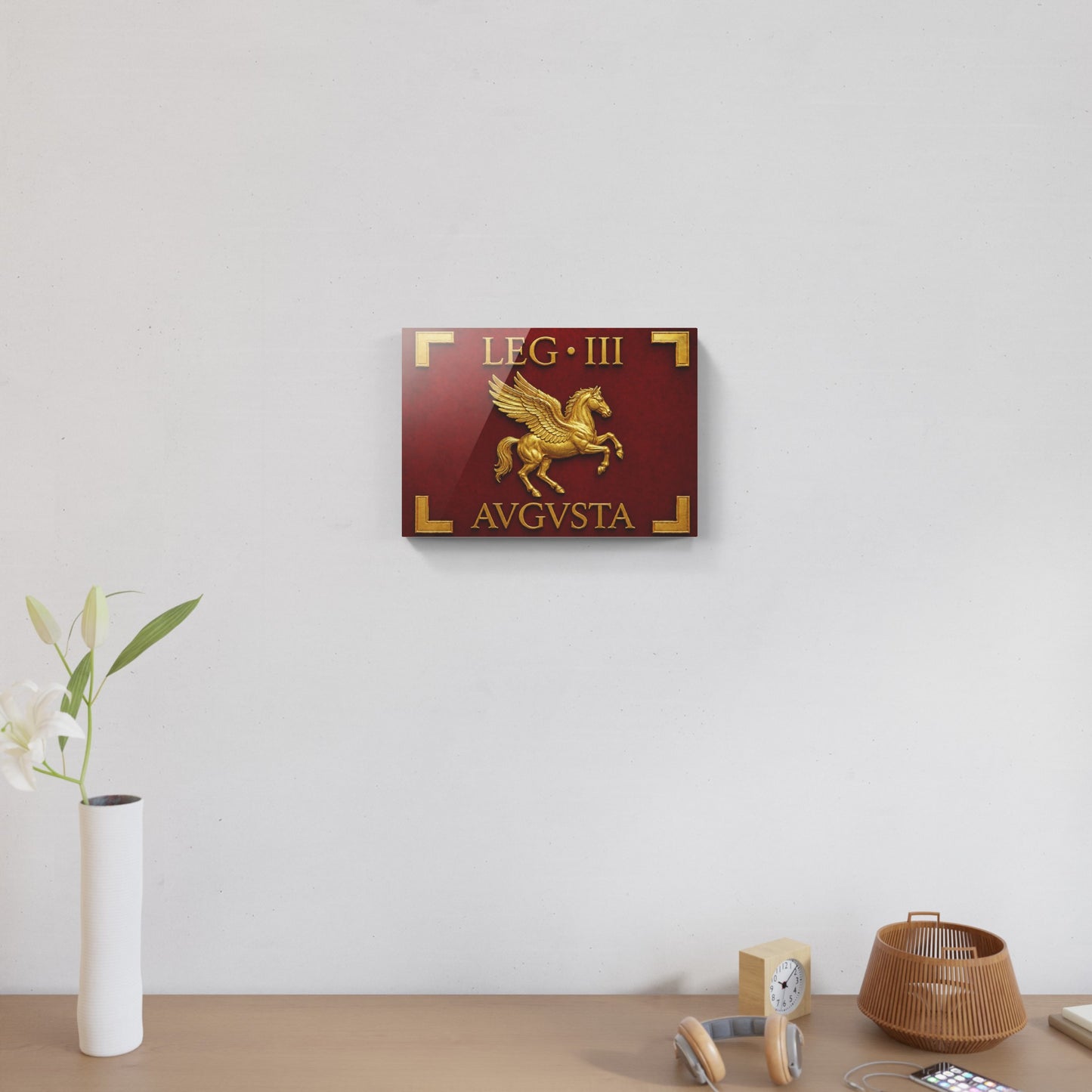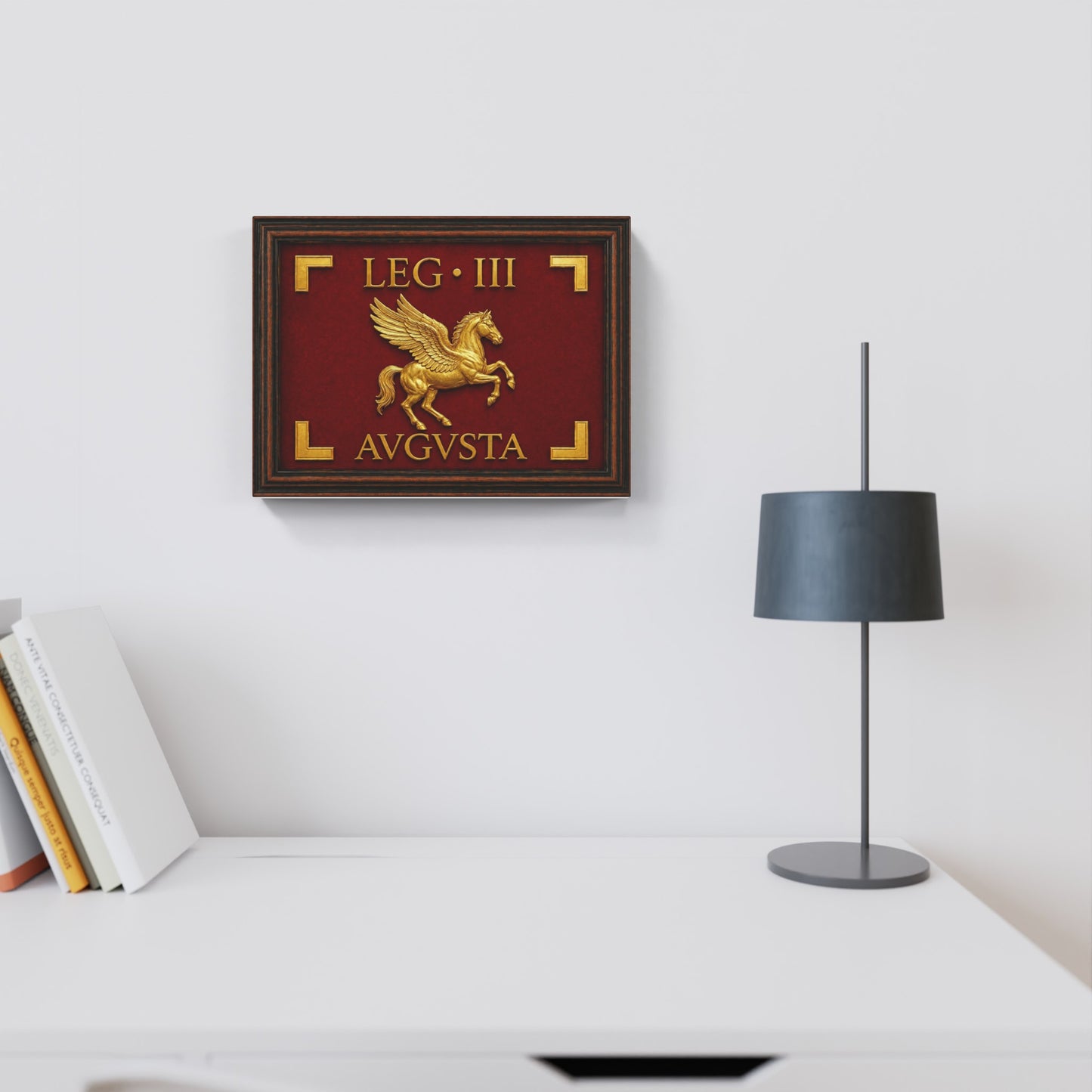


Legio III Augusta Roman Standard
Legio III Augusta Roman Standard
Couldn't load pickup availability
- Shipping with real-time tracking
- Handmade in 4-5 working days
or a special size? • Chat with us
Legio III Augusta was a long-serving legion, the heart of the Roman military presence in Africa for almost four centuries.
Founded in the late Republican age, probably in 43 BC on the orders of Octavian and the consul Gaius Vibius Pansa, III Augusta fought first in the civil wars on the side of the future Augustus, perhaps already at Philippi and then in the campaigns against Sextus Pompey. From 30 BC it was permanently transferred to the African provinces, first to Ammaedara and then to Lambaesis, from where it controlled the limes against the Numidian and Mauri tribes. Here the legion not only faced the great Berber revolts, such as that of Tacfarinas between AD 17 and 24, but also promoted widespread Romanisation through roads, aqueducts and settlements.
In the 2nd century it took part in external campaigns, from the Parthian fronts to the Marcomannic wars, while maintaining its main role as the African garrison. The crisis of the 3rd century saw it involved in hard wars against the desert tribes, in the suppression of the revolt of Gordian I and II and in its subsequent disbandment and re-establishment with new honorific titles (Iterum Pia Iterum Vindex, then Aureliana, finally Pia Fidelis). Still attested in the Notitia Dignitatum as Tertia Augustani, the legion remained active until the late 4th–early 5th century.
HISTORICAL-PHILOLOGICAL STANDARD
-
 Format
40 x 30 cm (15.7 x 11.8 in), balanced and versatile proportions -
 Philological reconstruction
The choice of animal on the standard is based on historical and numismatic sources -
 Colour accuracy
Red inspired by the only surviving original Roman standard, preserved at the Pushkin Museum in Moscow
Product specifications for the banner
Product: Historical-philological standard
Material: print on canvas
Size: 40 x 30 cm (15.7 x 11.8 in)
Technique: inkjet print on canvas
Reconstruction: based on historical, epigraphic and numismatic sources
Installation: supplied with a wooden support so it can easily be hung on the wall
Product specifications acrylic
Product: Historical-philological standard
Material: glossy print on acrylic
Size: 40 x 30 cm (15.7 x 11.8 in)
Technique: high-definition reproduction with brilliant rendering
Reconstruction: based on historical, epigraphic and numismatic sources
Installation: supplied with a hook so it can easily be hung on the wall
Framed canvas product specifications
Product: Historical-philological standard
Material: print on painter's canvas
Size: 40 x 30 cm (15.7 x 11.8 in)
Technique: inkjet print on painter's canvas
Frame: hand-carved walnut wood
Reconstruction: based on historical, epigraphic and numismatic sources