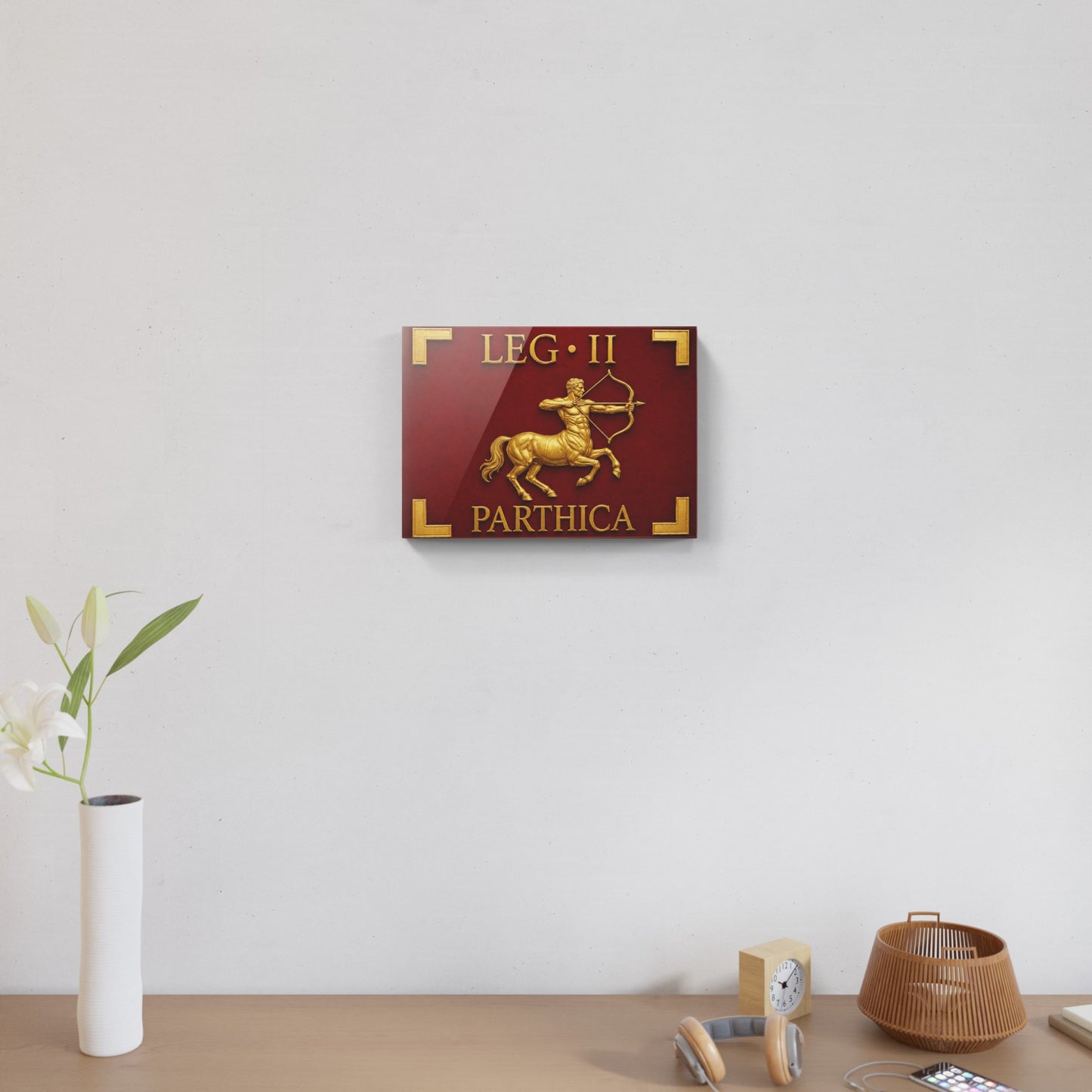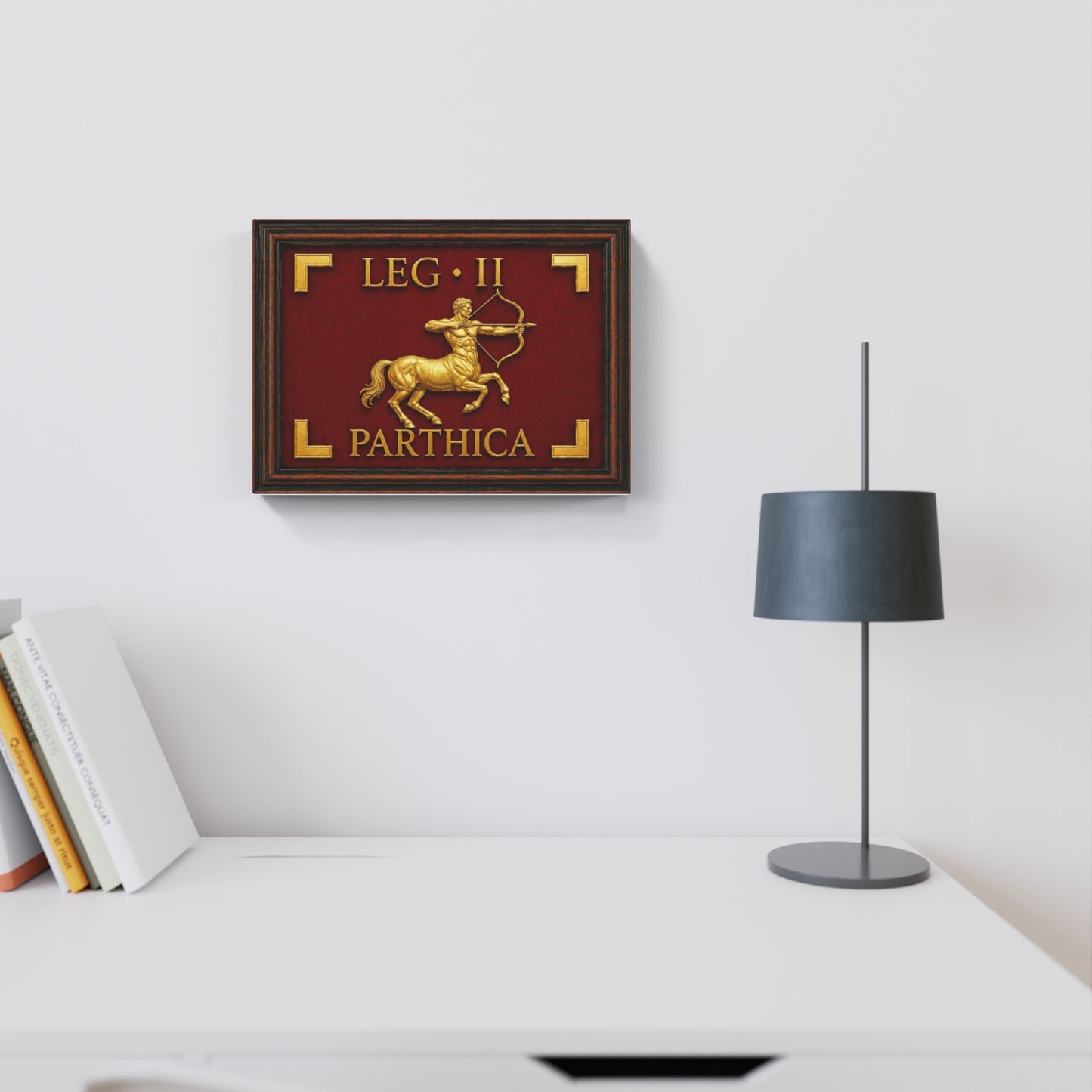


Legio II Parthica Roman Standard
Legio II Parthica Roman Standard
Couldn't load pickup availability
- Shipping with real-time tracking
- Handmade in 4-5 working days
or a special size? • Chat with us
Legio II Parthica was established by Septimius Severus in AD 197 for the campaign against the Parthian Empire, together with legions I and III Parthica, from which it derived its cognomen “Parthica”.
After the capture and sack of Ctesiphon, the legion was brought back to Italy and stationed at the Castra Albana near Albano Laziale, becoming the first permanent legion in Italy for about two centuries and serving as a mobile strategic reserve directly under the emperor. Its main emblems were the bull and the centaur, a symbol that also earned it the name “Alban legion”.
In 218 II Parthica was decisive in the struggle for power between Macrinus and Elagabalus: initially sent against the rebel, it went over to his side, contributing to the victory at Antioch and receiving as a reward the honorific epithets pia, fidelis, felix, aeterna. It later took part in Severus Alexander’s campaigns against the Sasanians and in operations on the Germanic front, continuing to be used as an imperial intervention force until at least the early 5th century.
HISTORICAL-PHILOLOGICAL STANDARD
-
 Format
40 x 30 cm (15.7 x 11.8 in), balanced and versatile proportions -
 Philological reconstruction
The choice of animal on the standard is based on historical and numismatic sources -
 Colour accuracy
Red inspired by the only surviving original Roman standard, preserved at the Pushkin Museum in Moscow
Product specifications for the banner
Product: Historical-philological standard
Material: print on canvas
Size: 40 x 30 cm (15.7 x 11.8 in)
Technique: inkjet print on canvas
Reconstruction: based on historical, epigraphic and numismatic sources
Installation: supplied with a wooden support so it can easily be hung on the wall
Acrylic product specifications
Product: Historical-philological standard
Material: glossy print on acrylic
Size: 40 x 30 cm (15.7 x 11.8 in)
Technique: high-definition reproduction with brilliant rendering
Reconstruction: based on historical, epigraphic and numismatic sources
Installation: supplied with a hook so it can easily be hung on the wall
Framed canvas product specifications
Product: Historical-philological standard
Material: print on painter's canvas
Size: 40 x 30 cm (15.7 x 11.8 in)
Technique: inkjet print on painter's canvas
Frame: hand-carved walnut wood
Reconstruction: based on historical, epigraphic and numismatic sources