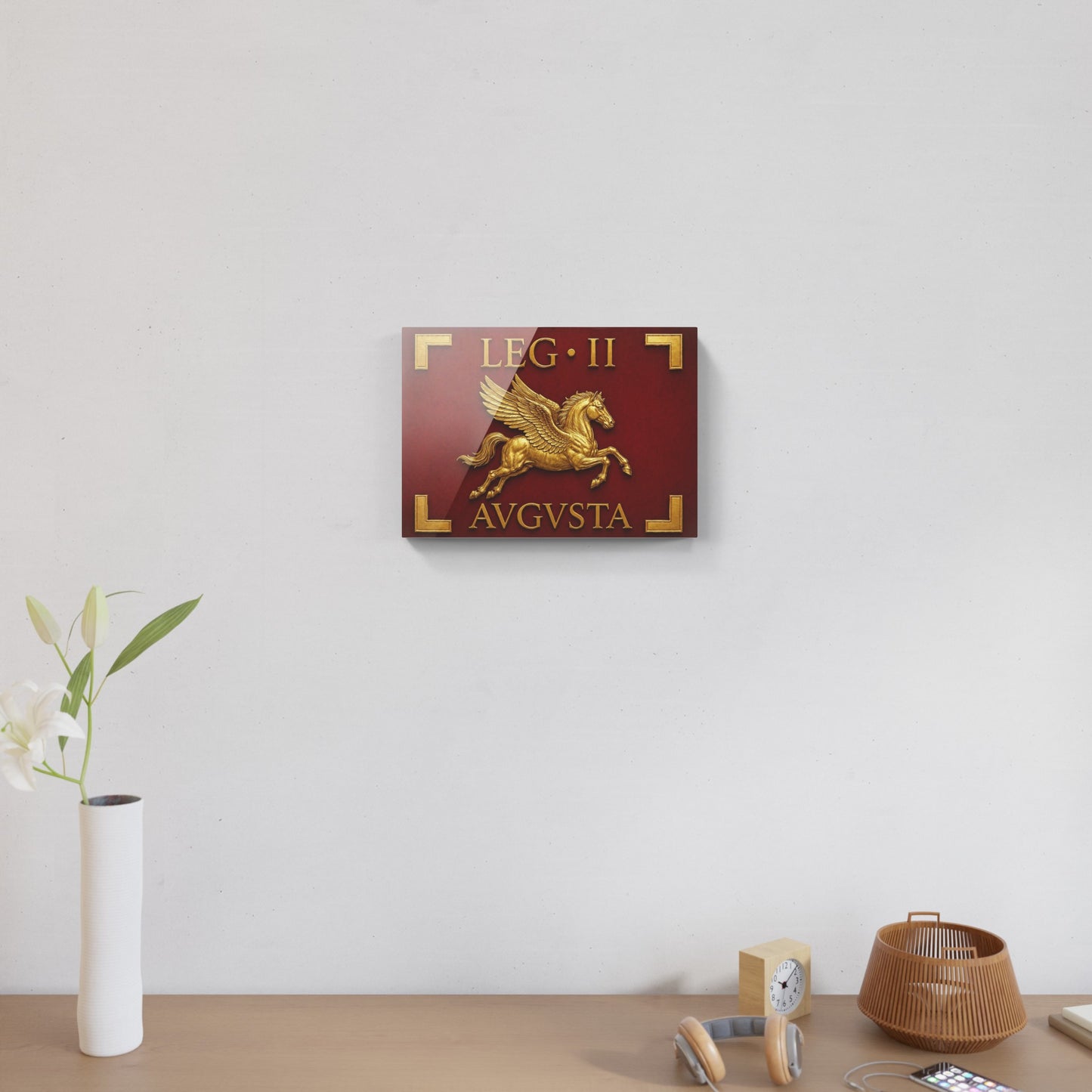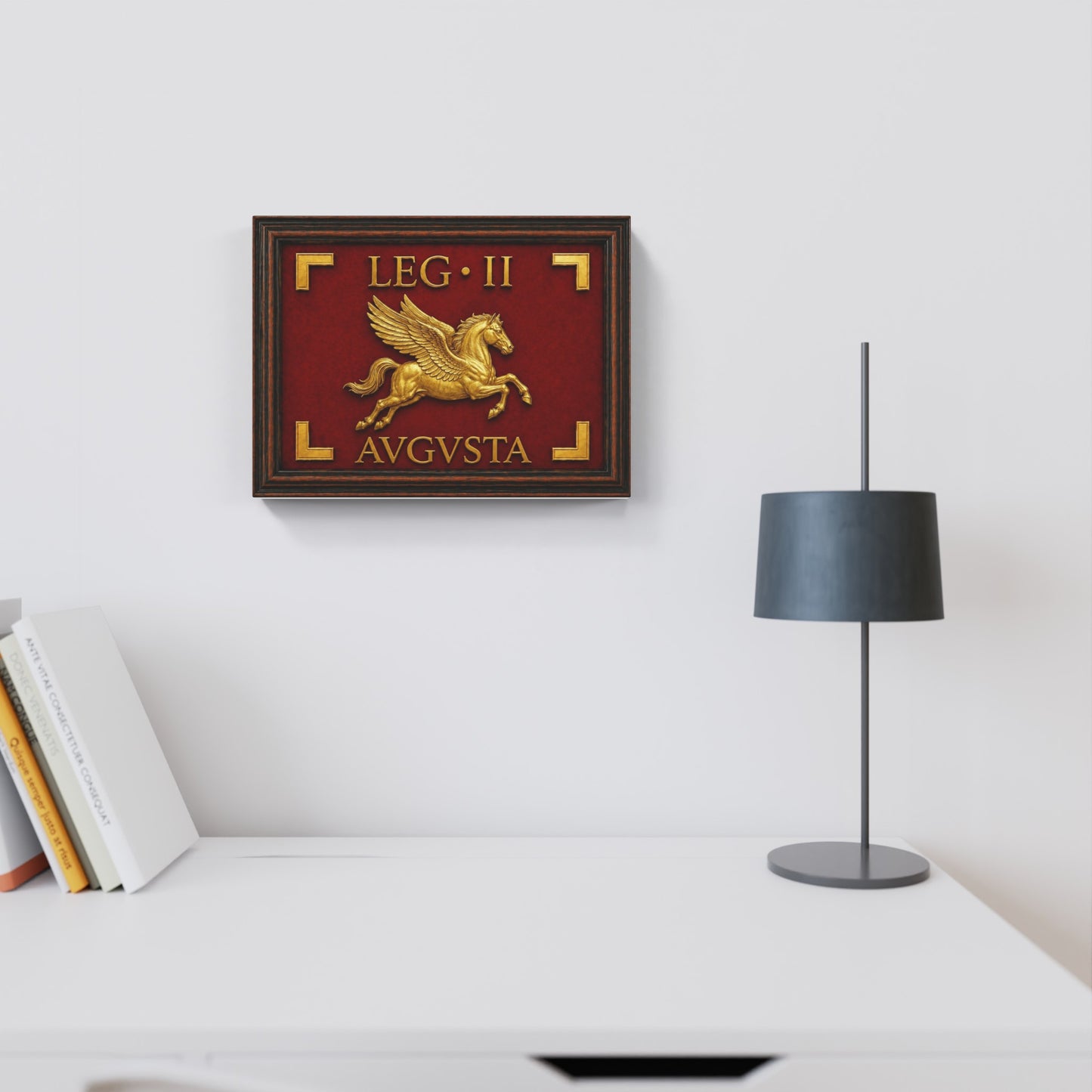


Legio II Augusta Roman Standard
Legio II Augusta Roman Standard
Couldn't load pickup availability
- Shipping with real-time tracking
- Handmade in 4-5 working days
or a special size? • Chat with us
Legio II Augusta was one of the longest-lived and most prestigious units of the Roman army, active from the period of the civil wars to the late imperial age. It was probably raised in 43 BC by Octavian and the consul Gaius Vibius Pansa, initially under the name II Sabina, to fight Mark Antony and then Caesar’s assassins at Philippi.
After the end of the civil wars it was re-formed in the Augustan age and deployed in Hispania Tarraconensis in the harsh campaigns against the Cantabrians and Asturians, contributing to the complete subjugation of the Iberian Peninsula. It was then transferred to the Rhine, where it took part in operations in Germania and in the campaigns of Germanicus after the Teutoburg disaster. The height of its prestige came in AD 43 when, led by Titus Flavius Vespasianus, it played a leading role in the invasion of Britannia ordered by Claudius, distinguishing itself in the capture of the oppida of the local tribes. Based at Isca/Caerleon, it long remained a mainstay of the Roman military presence in Britannia, engaged both in internal campaigns and in fortification works.
II Augusta is still attested in the 3rd century, a sign of an extraordinary operational continuity that makes it one of the emblematic legions of the expansion and consolidation of Roman power in the West.
HISTORICAL-PHILOLOGICAL STANDARD
-
 Format
40 x 30 cm (15.7 x 11.8 in), balanced and versatile proportions -
 Philological reconstruction
The choice of animal on the standard is based on historical and numismatic sources -
 Colour accuracy
Red inspired by the only surviving original Roman standard, preserved at the Pushkin Museum in Moscow
Product specifications for the banner
Product: Historical-philological standard
Material: print on canvas
Size: 40 x 30 cm (15.7 x 11.8 in)
Technique: inkjet print on canvas
Reconstruction: based on historical, epigraphic and numismatic sources
Installation: supplied with a wooden support so it can easily be hung on the wall
Acrylic product specifications
Product: Historical-philological standard
Material: glossy print on acrylic
Size: 40 x 30 cm (15.7 x 11.8 in)
Technique: high-definition reproduction with brilliant rendering
Reconstruction: based on historical, epigraphic and numismatic sources
Installation: supplied with a hook so it can easily be hung on the wall
Framed canvas product specifications
Product: Historical-philological standard
Material: print on painter's canvas
Size: 40 x 30 cm (15.7 x 11.8 in)
Technique: inkjet print on painter's canvas
Frame: hand-carved walnut wood
Reconstruction: based on historical, epigraphic and numismatic sources