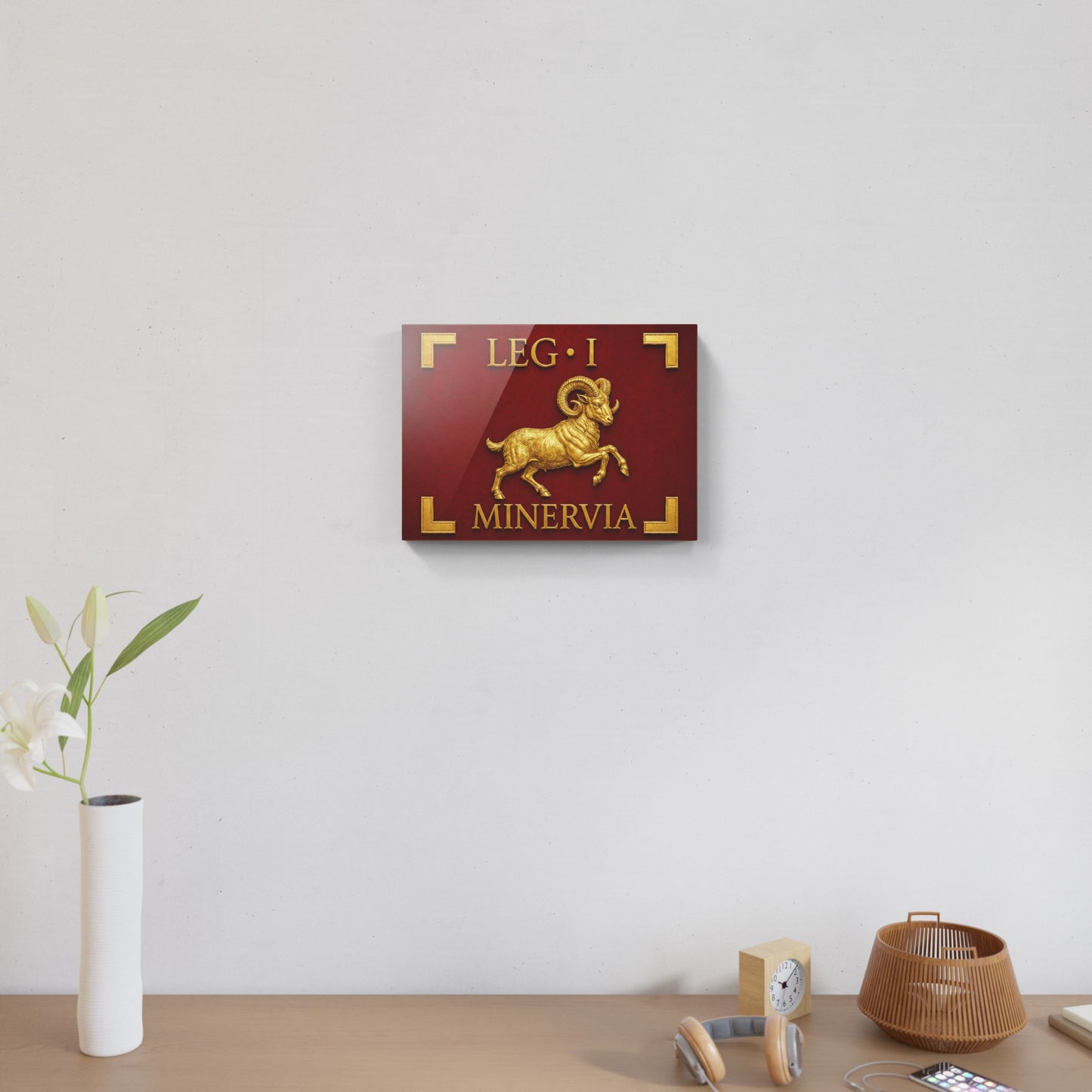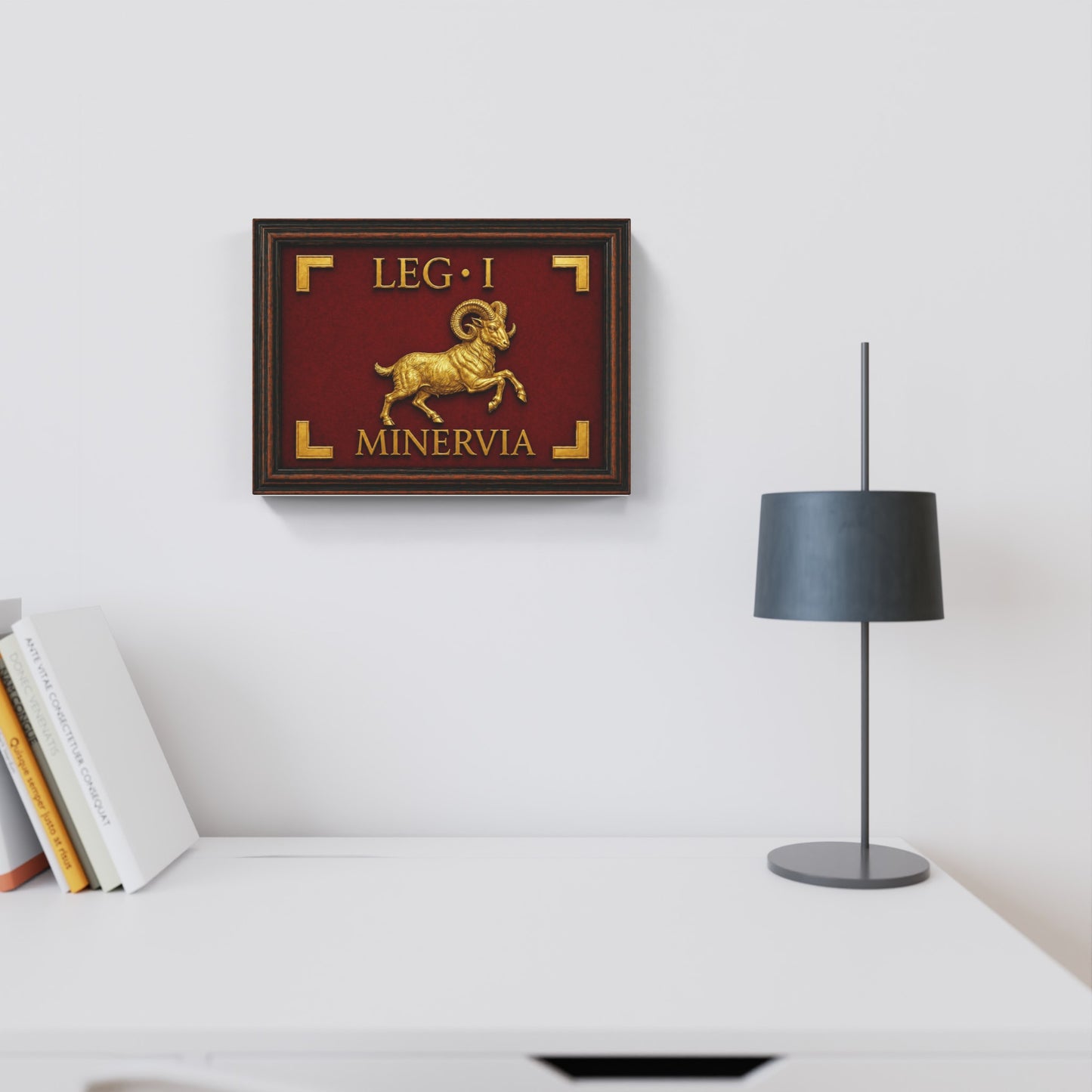


Legio I Minervia Roman Vexillum
Legio I Minervia Roman Vexillum
o una misura particolare? • Avvia chat WhatsApp
Couldn't load pickup availability
SKU:M4Z7H2Q9X5T8L
Legio I Minervia was created by Domitian around 82 AD for the campaign against the Germanic Chatti, placing itself under the protection of the goddess Minerva, who became its distinctive emblem.
Its main camp was Bonna, modern-day Bonn, in Germania Inferior, from where it controlled the middle Rhine. In 89, the legion supported the emperor against the revolt of the governor of Germania Superior, earning the honorary title of Pia Fidelis Domitiana for its loyalty.
Under Trajan, it participated in the Dacian Wars (101-102 and 105-106), partly under the command of the future emperor Hadrian; its symbol appears on Trajan's Column as evidence of its role in the Danubian campaigns. Upon returning to Bonna, it was involved in construction work, infrastructure, and quarry exploitation, cooperating with the XXX Ulpia Victrix in strengthening the Germanic limes. Vexillationes of I Minervia were sent to multiple fronts: against the Parthians, Marcomanni, Sarmatians, Caledonians, and Alamanni, demonstrating the operational mobility of the legion in the 2nd-3rd centuries. Still attested in the Rhenish region in the 4th century, it disappears from sources after the destruction of Bonna by the Franks, with no indication of whether it was destroyed or simply disbanded.
HISTORICAL-PHILOLOGICAL VEXILLUM
-
 Format
40 x 30 cm, balanced and versatile proportions -
 Philological reconstruction
The choice of animal in the vexillum is based on historical and numismatic sources -
 Color fidelity
Red inspired by the only original Roman vexillum preserved at the Pushkin Museum in Moscow
Product specifications for standard
Product: Historical-philological vexillum
Material: print on canvas
Size: 40 x 30 cm
Technique: inkjet printing on canvas
Reconstruction: based on historical, epigraphic, and numismatic sources
Installation: supplied with a wooden support for easy wall hanging
Product specifications for acrylic
Product: Historical-philological vexillum
Material: glossy print on acrylic
Size: 40 x 30 cm
Technique: high-definition reproduction with brilliant rendering
Reconstruction: based on historical, epigraphic, and numismatic sources
Installation: supplied with a hook for easy wall hanging
Product specifications for framed canvas
Product: Historical-philological vexillum
Material: print on pictorial canvas
Size: 40 x 30 cm
Technique: inkjet printing on pictorial canvas
Frame: hand-carved walnut wood
Reconstruction: based on historical, epigraphic, and numismatic sources