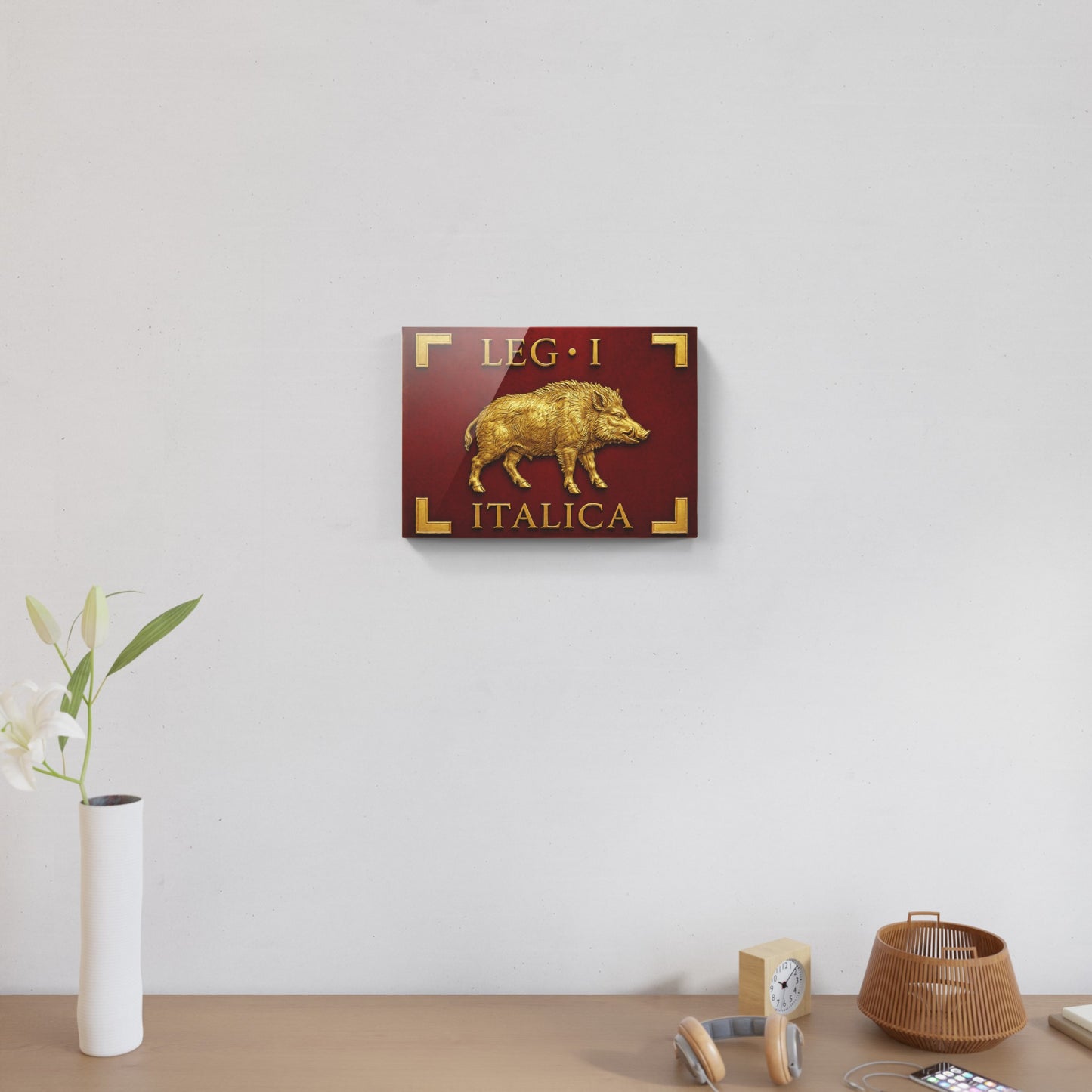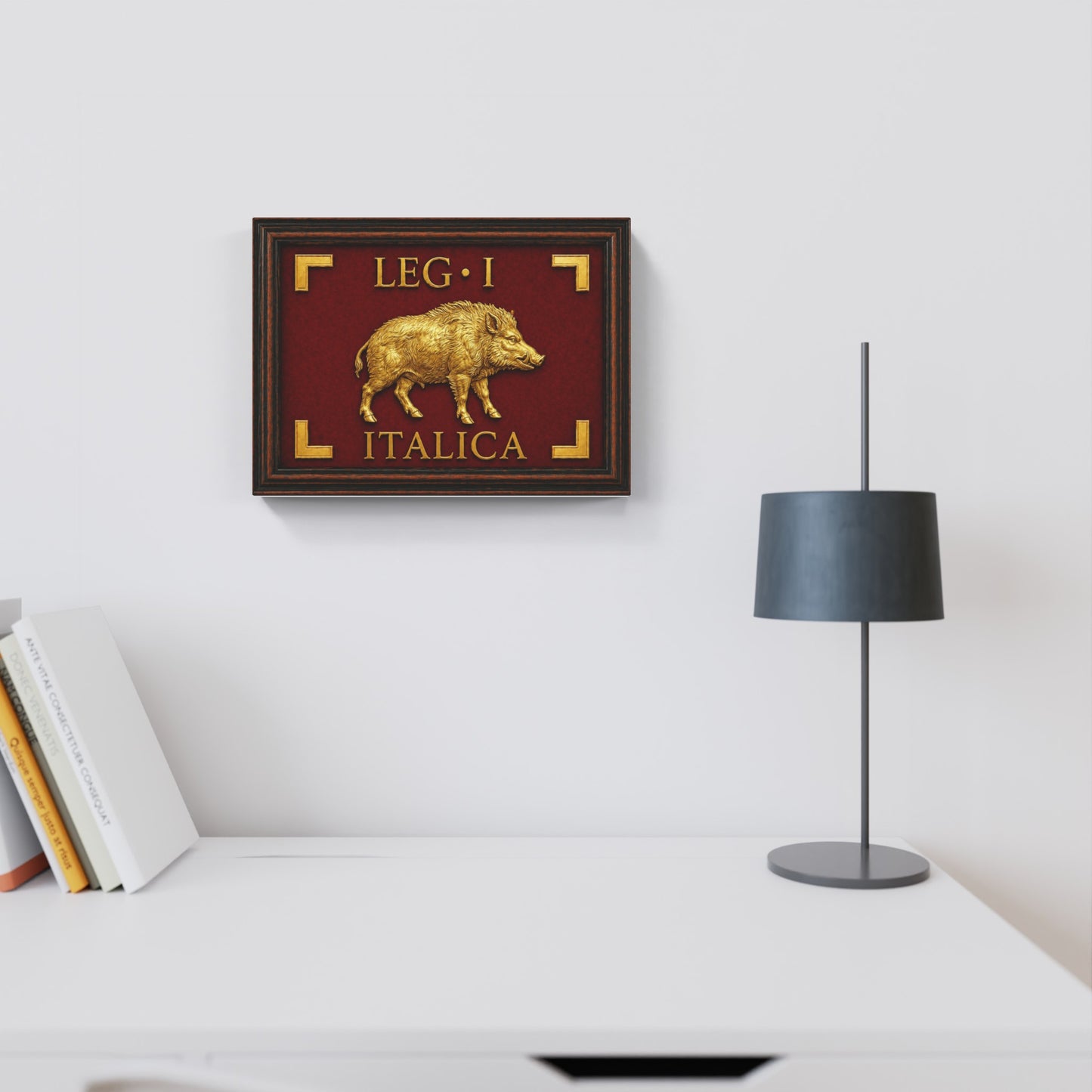


Legio I Italica Roman Vexillum
Legio I Italica Roman Vexillum
o una misura particolare? • Avvia chat WhatsApp
Couldn't load pickup availability
SKU:L8Q5T2M9X4Z7H
Legio I Italica was created by Nero on September 22, 66 AD, originally named Phalanx Alexandri Magni, for a planned but never realized expedition to Armenia through the Caspian Gates.
Recruited in Italy, with men selected for their above-average stature, it remained on the peninsula during the Year of the Four Emperors, initially siding with Vitellius and permanently taking the name Italica.
After Vespasian's ascent, it was transferred to Moesia, based in Novae on the Danube, where it remained for centuries as a pillar of the Danubian limes and a center of intense building activities, particularly bridges and infrastructure along the river. It participated in Trajan's Dacian Wars and the campaigns against Germanic tribes under Marcus Aurelius. During the Severan age, it supported Septimius Severus against Pescennius Niger, also operating in Byzantium and the East. In the 3rd century, it contributed to the construction of the limes Transalutanus and detachments operated in Dalmatia; epigraphic traces attest to its presence on the Danube as late as the early 5th century, a sign of a long and continuous history in the service of the Empire.
HISTORICAL-PHILOLOGICAL VEXILLUM
-
 Format
40 x 30 cm, balanced and versatile proportions -
 Philological reconstruction
The choice of animal in the vexillum is based on historical and numismatic sources -
 Color fidelity
Red inspired by the only original Roman vexillum preserved in the Pushkin Museum in Moscow
Product specifications on banner
Product: Historical-philological vexillum
Material: print on canvas
Size: 40 x 30 cm
Technique: inkjet printing on canvas
Reconstruction: based on historical, epigraphic, and numismatic sources
Installation: supplied with a wooden support for easy wall hanging
Acrylic product specifications
Product: Historical-philological vexillum
Material: glossy print on acrylic
Size: 40 x 30 cm
Technique: high-definition reproduction with brilliant rendering
Reconstruction: based on historical, epigraphic, and numismatic sources
Installation: supplied with a hook for easy wall hanging
Product specifications on framed canvas
Product: Historical-philological vexillum
Material: print on pictorial canvas
Size: 40 x 30 cm
Technique: inkjet printing on pictorial canvas
Frame: hand-carved walnut wood
Reconstruction: based on historical, epigraphic, and numismatic sources