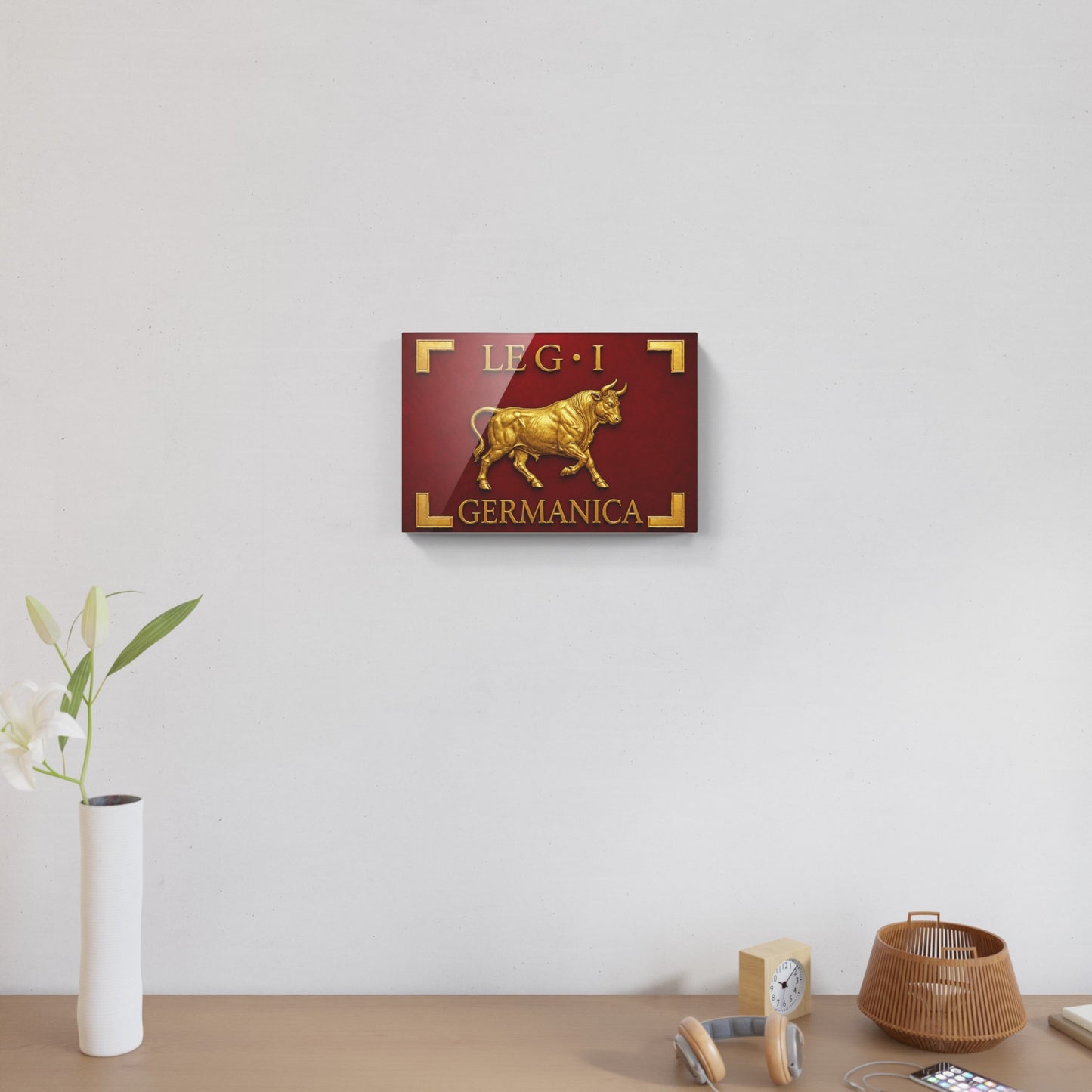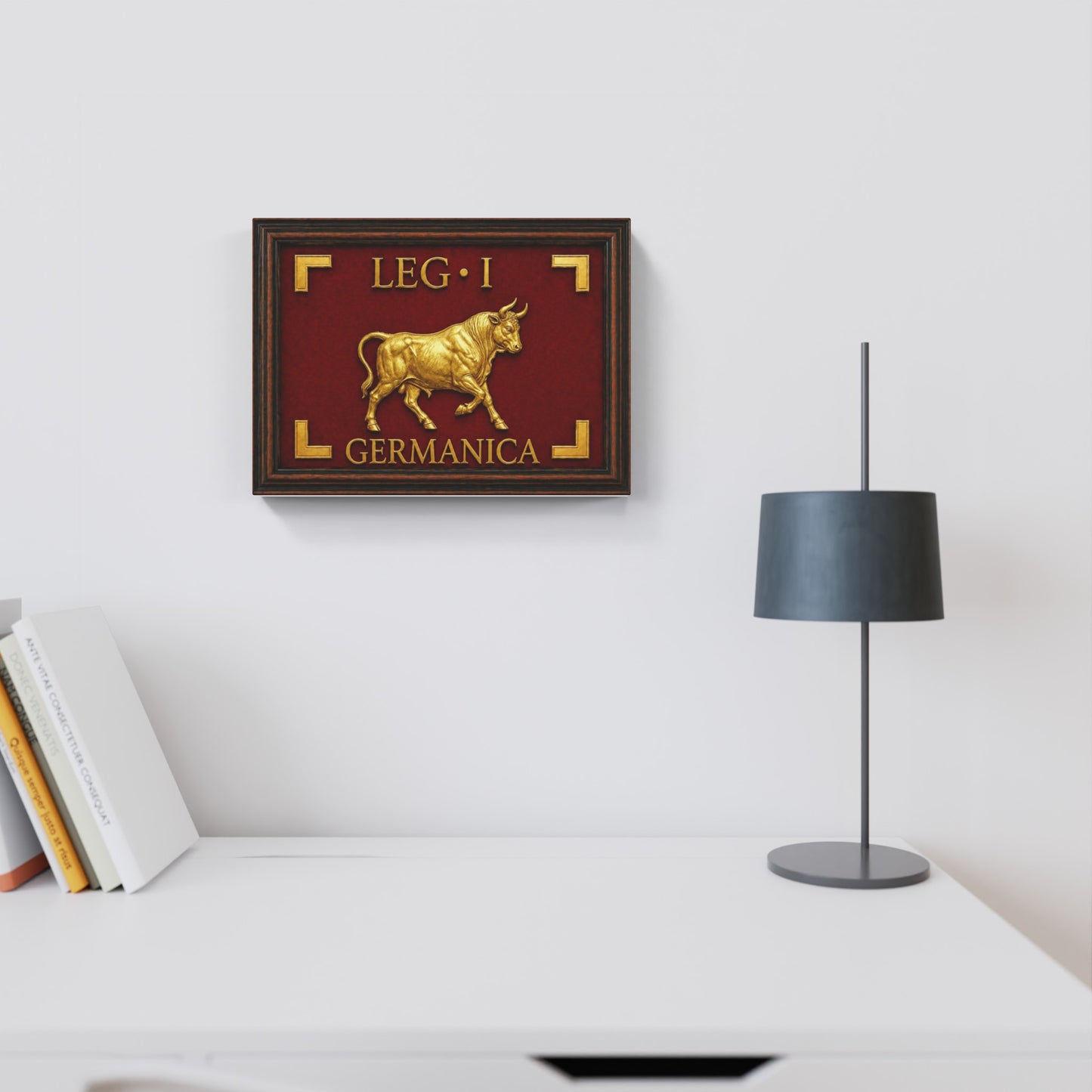


Legio I Germanica Roman Vexillum
Legio I Germanica Roman Vexillum
o una misura particolare? • Avvia chat WhatsApp
Couldn't load pickup availability
SKU:H5T9K2X7M4Q8Z
The Legio I Germanica was an Augustan-era legion, formed between 19 and 17 BC for campaigns against Germanic tribes along the Rhine.
It likely originated from the reorganization of an earlier unit, the I Augusta, which had already served under Augustus in the civil wars and Hispanic campaigns. Its name "Germanica" reflects its frontier role on the Rhenish Limes, where it operated in Drusus' and later Tiberius' expeditions beyond the Rhine. After the Teutoburg disaster, the legion helped stabilize Germania Inferior, primarily based in Bonna (Bonn).
In 14 AD, it took part in the uprisings of the Rhenish legions upon Augustus' death; subsequently, it was involved in various operations in Gaul and against Germanic tribes. In 69 AD, the year of the four emperors, the I Germanica, led by legate Fabius Valens, supported Vitellius and fought victoriously at the First Battle of Bedriacum, paving the way for his ephemeral power. However, the Batavian revolt (70 AD) marked its downfall: besieged at Castra Vetera and severely depleted, the legion was deemed compromised and disbanded by Vespasian, who merged its remnants into the VII Galbiana, giving rise to the VII Gemina.
HISTORICAL-PHILOLOGICAL VEILLUM
-
 Size
Size
40 x 30 cm, balanced and versatile proportions -
 Philological reconstruction
The choice of animal in the vexillum is based on historical and numismatic sources -
 Chromatic fidelity
Red inspired by the only original Roman vexillum preserved in the Pushkin Museum in Moscow
Product specifications on banner
Product: Historical-philological vexillum
Material: print on canvas
Size: 40 x 30 cm
Technique: inkjet printing on canvas
Reconstruction: based on historical, epigraphic and numismatic sources
Installation: supplied with a wooden support for easy wall hanging
Product specifications acrylic
Product: Historical-philological vexillum
Material: glossy print on acrylic
Size: 40 x 30 cm
Technique: high-definition reproduction with brilliant rendering
Reconstruction: based on historical, epigraphic and numismatic sources
Installation: supplied with a hook for easy wall hanging
Product specifications on framed canvas
Product: Historical-philological vexillum
Material: print on pictorial canvas
Size: 40 x 30 cm
Technique: inkjet printing on pictorial canvas
Frame: hand-carved walnut wood
Reconstruction: based on historical, epigraphic and numismatic sources