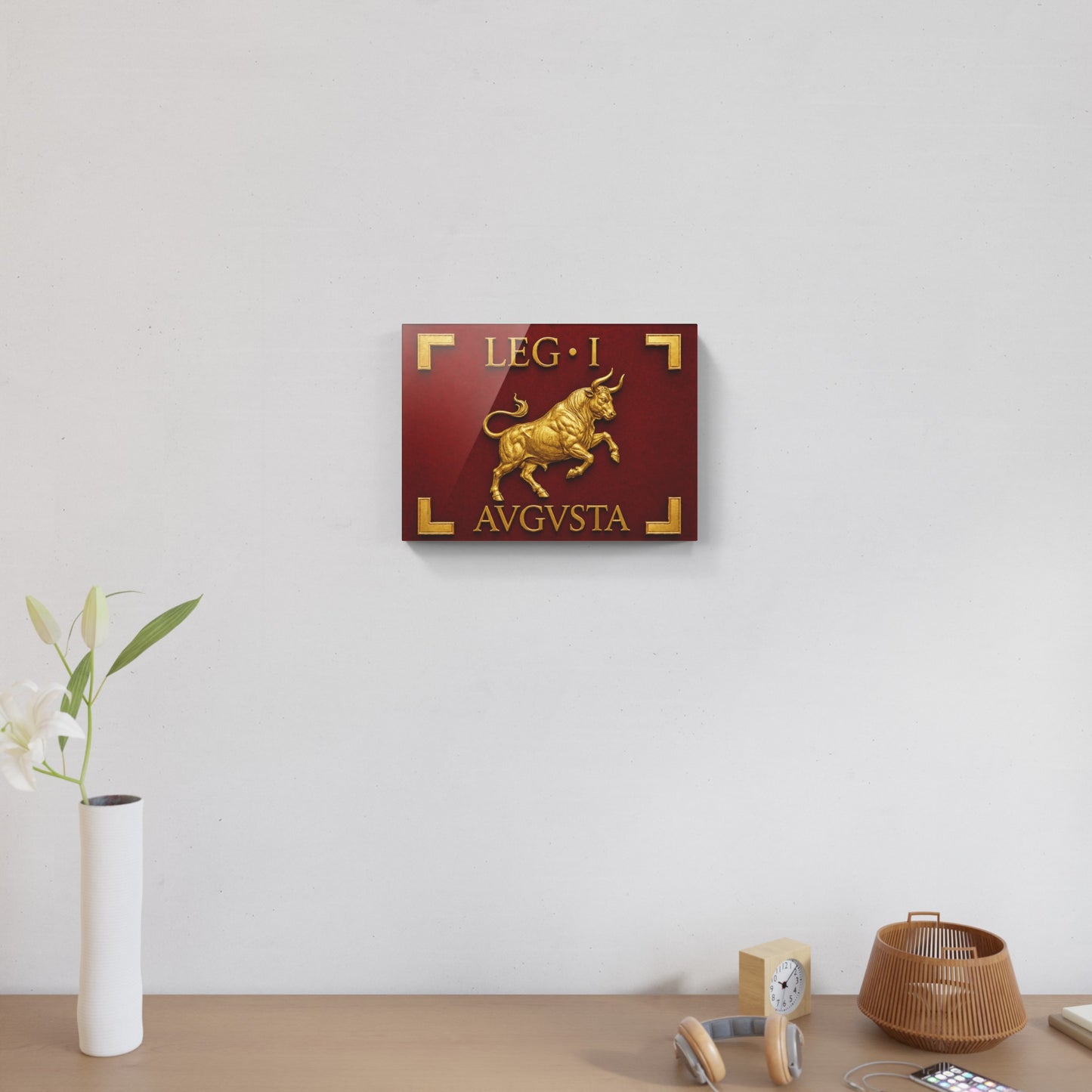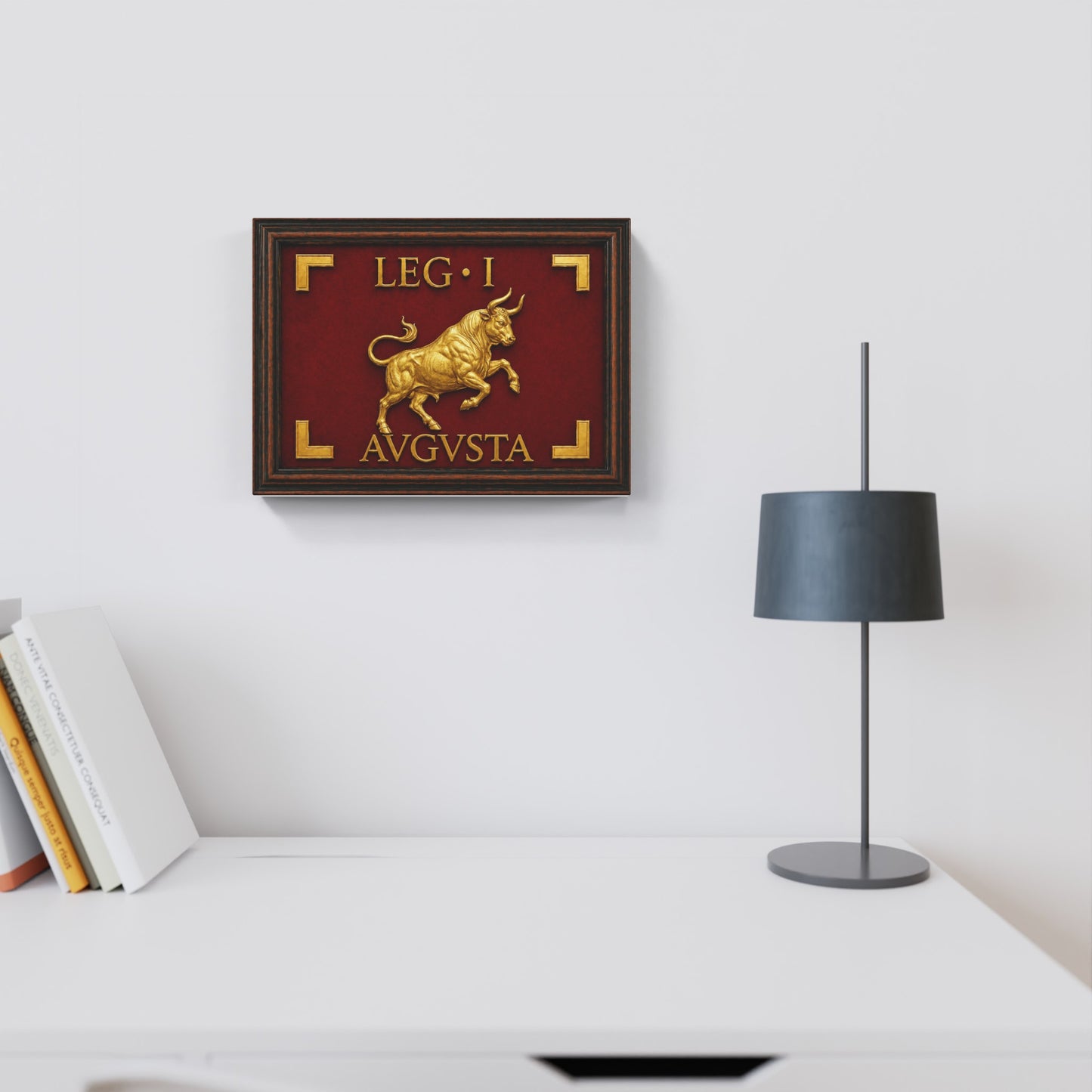


Legio I Augusta Roman Vexillum
Legio I Augusta Roman Vexillum
o una misura particolare? • Avvia chat WhatsApp
Couldn't load pickup availability
SKU:9X2B7M4QK8L5T
Legio I Augusta, perhaps the heir of a previous Legio I of Caesar or Pompey, was reorganized in the Augustan age and linked to the name of the princeps as a particularly prestigious unit.
Initially employed in the civil wars alongside Caesar, it participated in Pharsalus in 48 BC and then, after the dictator's assassination, came under Lepidus and then Octavian, fighting at Actium against Antony and Cleopatra. It was precisely in the great restructuring of the armies following the victory of Actium that the legion probably received the appellation Augusta, as a seal of the loyalty shown to the future Augustus.
Between 30 and 16 BC, Legio I Augusta was stationed in Hispania Tarraconensis, where it took part in the harsh Cantabrian Wars, although sources recall the shame of losing one of its vexilla, an episode that cost the legion a severe punishment and, according to some traditions, the temporary revocation of the honorary title linked to the emperor's name. Subsequently, the unit was involved in operations along the Rhine, where its "ashes" merged into Legio I Germanica, destined for the Germanic fronts of the imperial age.
HISTORICAL-PHILOLOGICAL VEXILLUM
-
 Format
40 x 30 cm, balanced and versatile proportions -
 Philological reconstruction
The choice of animal in the vexillum is based on historical and numismatic sources -
 Chromatic fidelity
Red inspired by the only original Roman vexillum preserved at the Pushkin Museum in Moscow
Product specifications on banner
Product: Historical-philological vexillum
Material: print on canvas
Size: 40 x 30 cm
Technique: inkjet printing on canvas
Reconstruction: based on historical, epigraphic and numismatic sources
Installation: supplied with a wooden support to be easily hung on the wall
Product specifications acrylic
Product: Historical-philological vexillum
Material: glossy print on acrylic
Size: 40 x 30 cm
Technique: high-definition reproduction with brilliant rendering
Reconstruction: based on historical, epigraphic and numismatic sources
Installation: supplied with a hook to be easily hung on the wall
Product specifications framed canvas
Product: Historical-philological vexillum
Material: print on pictorial canvas
Size: 40 x 30 cm
Technique: inkjet printing on pictorial canvas
Frame: hand-carved walnut wood
Reconstruction: based on historical, epigraphic and numismatic sources